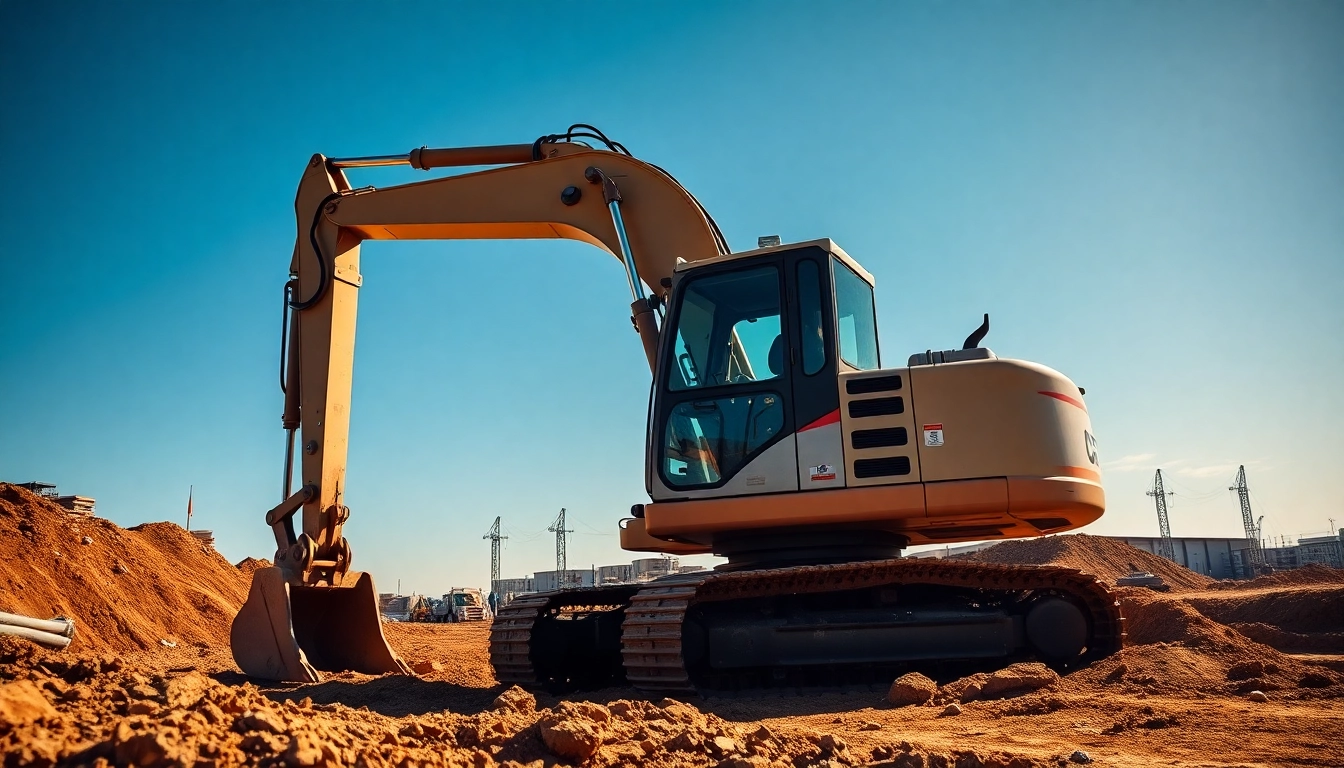
Introduction to Excavators
What is an Excavator?
An excavator is a heavy construction machine that utilizes a boom, stick, and bucket (or sometimes a grapple) to dig trenches, holes, and foundations. These versatile machines are equipped to perform various tasks in the construction and mining fields, offering efficiency and power that small equipment cannot match. Operating on tracks or wheels, excavators provide stability and mobility, enabling them to work in a wide range of environments, from urban construction sites to remote mining operations.
Common Uses of Excavators
Excavators are widely recognized for their capability in multiple applications. They are primarily used for:
- Dirt Excavation: The main use, they efficiently dig trenches, remove soil, and prepare sites for construction.
- Material Handling: Equipped with specialized attachments, excavators can lift and transport heavy materials.
- Demolition: With hydraulic attachments like shears or hammers, they can break down structures.
- Landscaping: Ideal for digging pools, ponds, or grading land.
- Mining and Quarrying: Excavators can extract minerals and move rubble smoothly.
Key Features of Excavators
When discussing excavators, several key features enhance their functionality and performance, including:
- Hydraulic System: Allows for powerful movement and control of the bucket and attachments.
- Rotating Cab: Many models feature a swiveling upper body that enhances operator visibility and versatility.
- Boom and Stick Configuration: The length and design can vary, affecting digging depth and reach.
- Attachments: A wide range of attachments, such as buckets, augers, or hammers, enhance capabilities.
Types of Excavators
Mini Excavators
Mini excavators, also known as compact excavators, are lightweight and designed for navigating tighter spaces. Typically under 6 tons, they are ideal for residential projects, small-scale landscaping, and utility work. Their compact design allows them to operate in confined areas, making them incredibly versatile.
Standard Excavators
Standard excavators range from 6 to 45 tons and are most often used on construction sites. They offer a balance of power and maneuverability, making them suitable for various tasks such as digging, grading, and material handling. Their size allows them to access most job sites while still providing the necessary lifting and digging capacity.
Large Excavators
Large excavators are heavy machines, usually over 45 tons, utilized in large-scale construction and mining projects. They feature powerful engines and hydraulic systems designed to handle substantial workloads. These machines excel in high-capacity excavation, and material loading, making them indispensable for major infrastructure projects, such as highways, railways, and large buildings.
Choosing the Right Excavator
Assessing Project Requirements
Selecting the appropriate excavator starts with a thorough assessment of your project's specific requirements. Factors such as terrain type, project size, and weight limit for hauling materials play a crucial role in this decision. Conducting a site inspection to analyze these elements will aid in determining the necessary excavator type and size.
Budget Considerations
Your budget will largely dictate whether you choose to rent or purchase an excavator. If the need is temporary, rental can be a cost-effective choice, but for long-term projects, investing in an excavator might provide better value. Assess your total cost of ownership including maintenance, fuel expenses, and potential repairs against rental fees to make an informed decision.
Rental vs. Purchase
The decision between renting and purchasing depends on frequency of use, project duration, and cash flow. Renting provides flexibility, allowing you to use various models for different projects. Purchasing offers long-term savings if you need the excavator regularly. Weigh the pros and cons based on your operational needs to arrive at the best option.
Operating an Excavator Safely
Pre-Operational Safety Checks
Before operating an excavator, conduct thorough pre-operational safety checks. Inspect the machine for any visible damages, fluid leaks, and ensure all safety equipment is in working order. Verify that the controls function correctly, and check hydraulic levels. Pre-checks reduce accidents and prolong the machine's lifespan.
Best Practices for Excavator Operation
Operating an excavator requires skill and adherence to safety protocols. Always wear appropriate personal protective equipment (PPE) and ensure that the working area is clear of obstructions. Keep the cab secure and maintain visibility of all surroundings. Operators should also stay informed about load limits and proper use of attachments to avoid tipping or structural failure.
Common Safety Hazards
Common safety hazards when operating an excavator include colliding with other machinery, falling objects, and trench collapses. Operators should receive training on recognizing these dangers. Ensuring proper communication between site workers and operators can also help mitigate risks, improving safety in high-traffic areas.
Future of Excavators in Construction
Technological Advancements
The construction industry is witnessing rapid technological advancements, particularly in excavators. Innovations such as telematics allow for real-time monitoring of machine performance, fuel efficiency, and maintenance scheduling. Additionally, automated and semi-autonomous systems are emerging, increasing precision and efficiency while reducing human error.
Eco-Friendly Innovations
As sustainability becomes a priority, manufacturers are introducing eco-friendly innovations to excavators. Electric excavators and models with low-emission engines significantly reduce carbon footprints. Integrating hybrid technologies can help operators to improve efficiency while minimizing environmental impact, aligning with industry trends toward greener practices.
Industry Trends and Predictions
Looking ahead, the construction sector will increasingly embrace smart technologies, including AI and augmented reality to enhance excavator operations. The push for automation will reshape how projects are managed and executed, fostering greater efficiency, safety, and sustainability. Keeping up with these trends will be crucial for anyone in the construction industry.
Frequently Asked Questions (FAQs)
What factors determine the size of an excavator I should choose?
The size of an excavator depends on project scope, weight limits, and site accessibility. Thorough assessment of these factors will guide you to the right size.
How do I maintain an excavator properly?
Regularly check fluid levels, inspect for wear and tear, perform timely repairs, and follow the manufacturer's maintenance schedule to ensure optimal performance.
What attachments can be used with an excavator?
Common attachments for excavators include buckets, hammers, augers, grapples, and thumbs, allowing for a range of tasks from digging to demolition.
How can I ensure safety while operating an excavator?
Always conduct pre-operational checks, wear appropriate PPE, maintain communication with crew members, and adhere to operational guidelines to ensure safety.
Are there eco-friendly excavators available?
Yes, many manufacturers now offer electric or hybrid excavators designed to reduce emissions and environmental impact, aligning with sustainability goals in construction.